
Exhibits
Exhibits
Regardless of the day you visit, we offer a great selection of permanent, temporary, and traveling exhibits to help you learn about mountain life and culture, and see how our region has evolved.
Our exhibits explore a range of topics from the history of southern Appalachian culture, including folk medicine, mining, art, and agriculture.
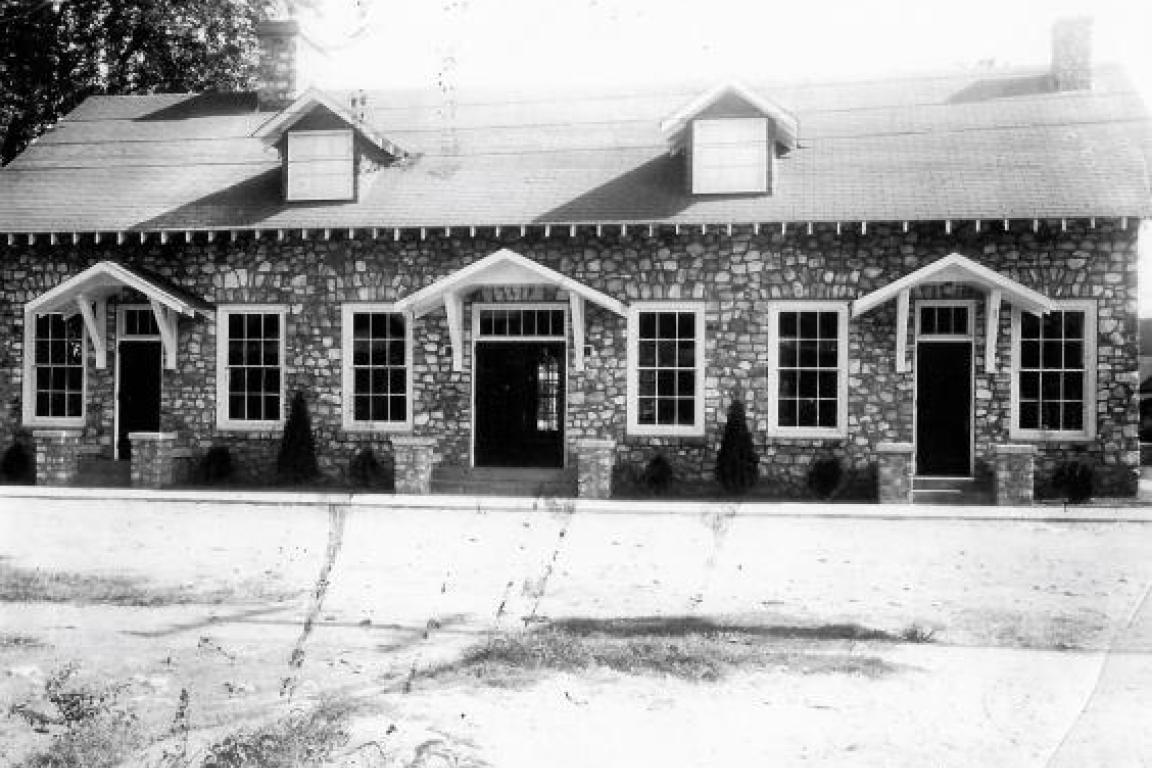
The Museum
Mountain Gateway Museum is unique because we are housed in a building with its own history. In 1935, President Franklin Roosevelt launched the New Deal, a nationwide initiative to employ Americans who suffered during the Great Depression. One of the New Deal programs was the Works Progress Administration (WPA), a program for jobseekers to build public works projects. The WPA built the museum's building as a community center in 1937. The town of Old Fort converted it into a private pioneer museum in the 1960s, and around a decade later the State of North Carolina acquired it, making it the state's western-most branch of the North Carolina Museum of History, part of the Department of Natural and Cultural Resources.
Our Cabins
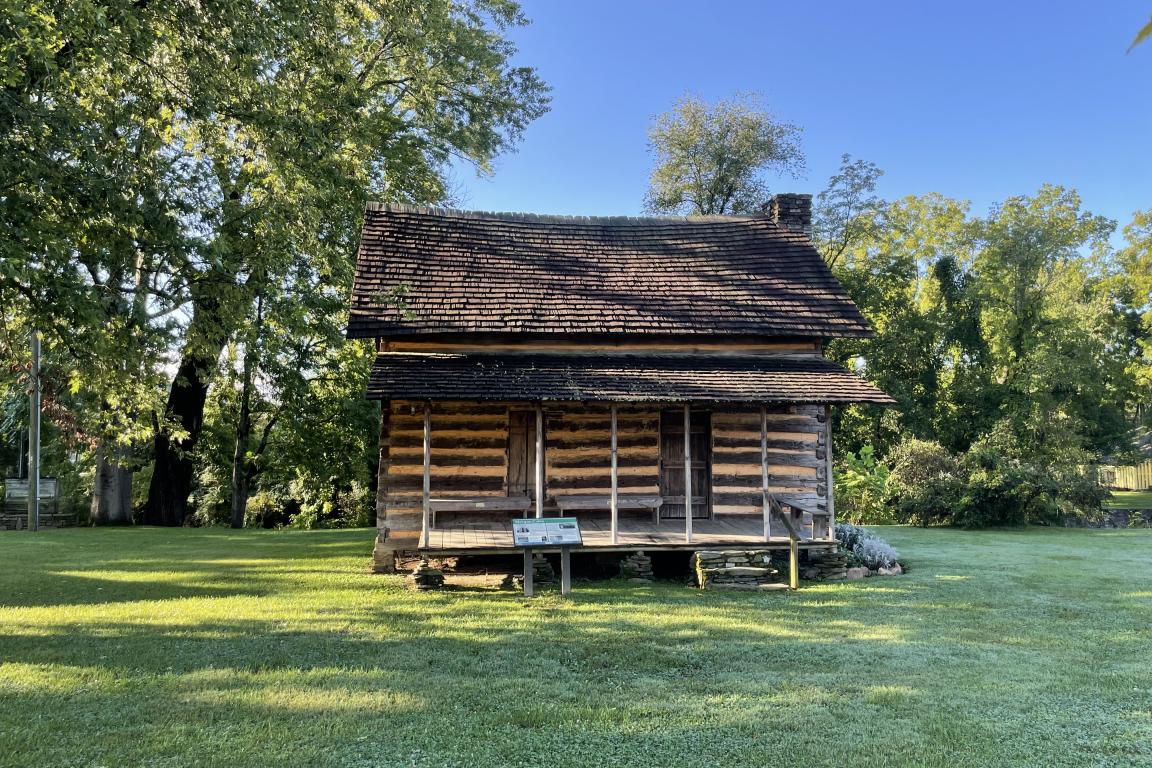
Near the present-day intersection of Highway 221 and Mudcut Road, William Bloomfield Rumfeldt (nickname Bloom) built what became known as the Morgan Cabin in the 1880s. Southern Railway employed Bloom as a section foreman while he and his wife Louise Bruner Rumfeldt lived in the cabin and farmed 40 acres. Later, when the couple moved to Shelby, they gave their home to one of their daughters and her husband. The government eventually seized the property for back taxes, and John Mostiller bought it. At some point, it passed into the hands of the Morgan family, hence its name. The museum acquired it in the late 1970s, when volunteers and staff moved it piecemeal and reconstructed it on this spot. The cabin measures 19 by 26 feet with a roof of cedar shingles. The daubing between the pine logs is mud and straw. For additional insulation, builders would often use animal fur (frequently hog bristles in this area), rocks, sticks, and many other materials as chinking to fill in the gaps before applying the daubing. The half-dovetail cornering indicates the influence of 18th century German immigrants in New England, who passed along their building techniques to the Scots-Irish and English settlers trekking through Pennsylvania and down the Great Wagon Road to settle in the southern Appalachians. The most interesting aspect of the Morgan Cabin’s construction to many is the lucky 13 configuration: 13 logs, 13 beams, and 13 joists, in reflection of the Appalachian belief this would bring good luck.
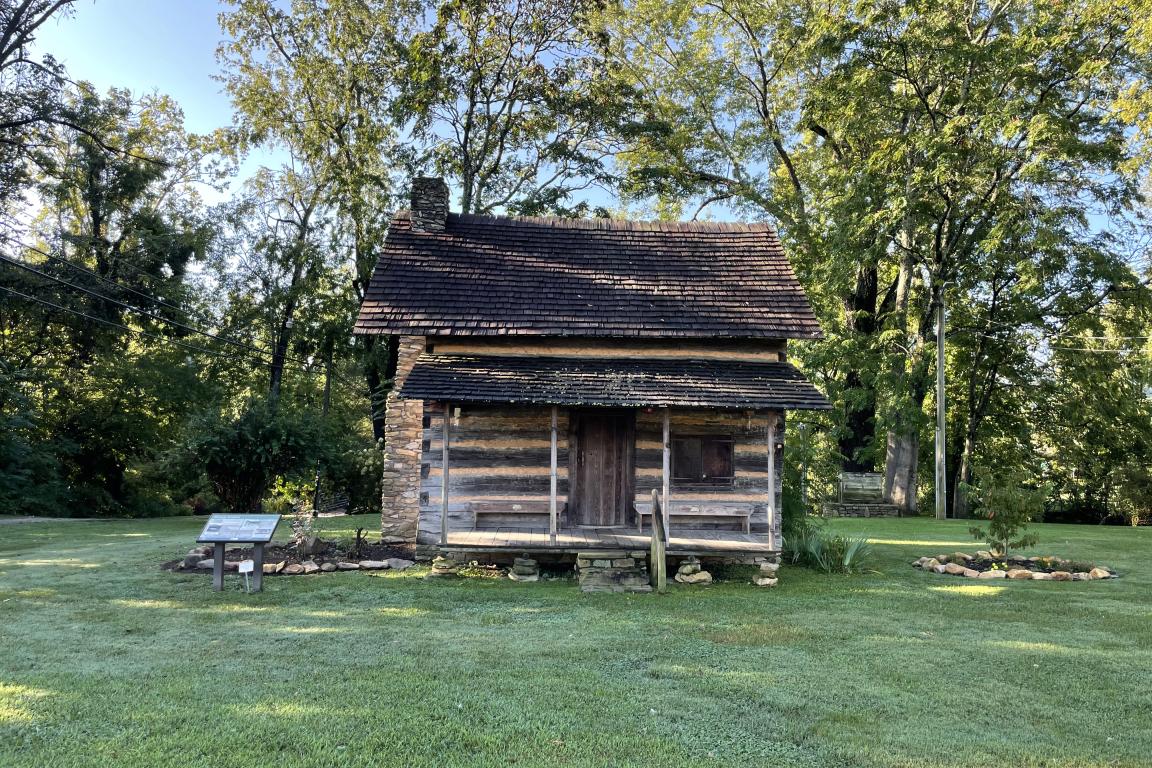
Thomas and Martha Allison built and occupied this cabin on Cane Creek east of Old Fort in the 1860s and 70s after he returned from the Civil War as a Confederate veteran. When the Allisons moved to Colorado in the 1880s, William and Jane Suttlemyre supposedly lived in it for a while before it passed to the Stepp family. John Lytle Stepp (Martha Allison’s nephew) bought the cabin in 1902. He added a three-room frame structure to the cabin to accommodate his family of 12 children and 45 grandchildren, who visited often. John L. Stepp was still living in the cabin when he died at the age of 87 in 1938. The Stepp family owned the cabin until 1973, when they deeded it to the museum. The three-room addition and the stone chimney had fallen down in the intervening years, leaving the original cabin to be moved intact to this location. Builders added a new chimney, the porch, and cedar shingles to replace the tin roof. Like the Morgan Cabin, the corners join in half-dovetails, and the daubing is mud and straw. It stands 18.5 feet wide, 20 feet long, and 10 chestnut and pine logs high.